Minimalist Lifestyle UK Simplify, Focus, Thrive in 2026

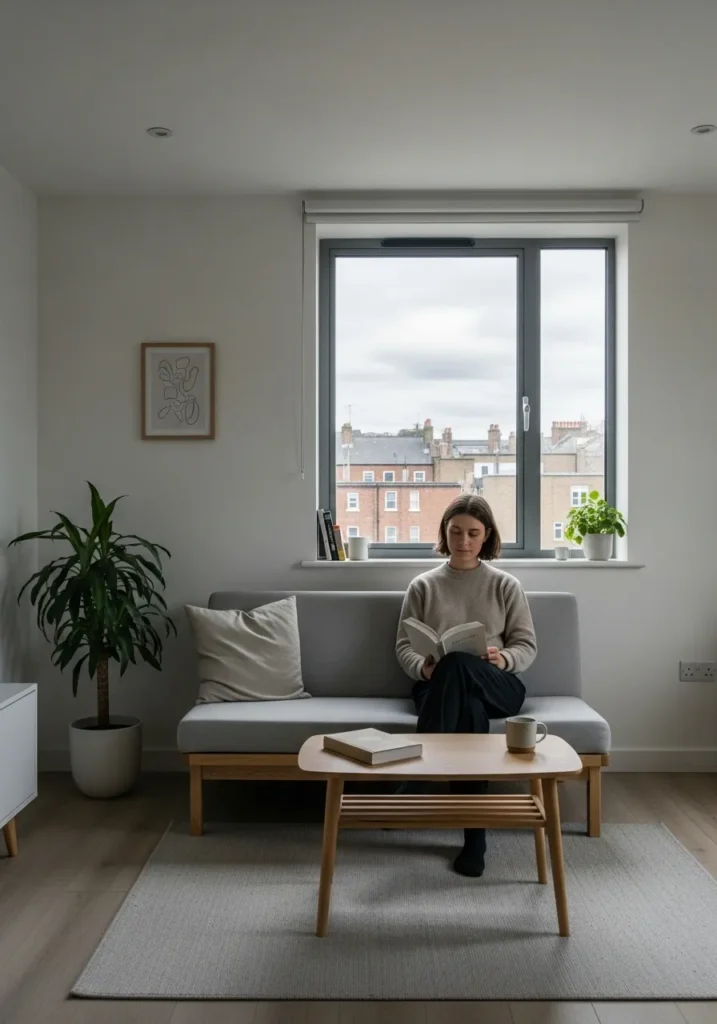
In today’s fast-paced world, clutter and overstimulation are common challenges for many people in the UK. A growing number of individuals are turning to a minimalist lifestyle as a solution, seeking simplicity, clarity, and more meaningful daily experiences. The concept of “minimalist lifestyle UK” emphasizes intentional living, reducing excess, and focusing on what truly matters—both materially and mentally.
Minimalism is more than just decluttering physical spaces; it is a holistic approach encompassing home organization, mindful spending, mental wellness, productivity, sustainable living, and daily routines. By adopting minimalist principles, individuals can reduce stress, increase focus, enhance creativity, and reclaim their time and energy. In the UK, minimalist living is gaining traction, particularly in urban areas where space is limited, and the pace of life is rapid.
This comprehensive guide explores actionable strategies for embracing a minimalist lifestyle in the UK, including practical steps for decluttering, simplifying your home, controlling spending habits, improving mental clarity, and building a purposeful, balanced daily routine. Whether you live in London, Manchester, Edinburgh, or a smaller town, the principles outlined in this article can be tailored to suit your environment and personal goals.
By the end of this article, readers will have a complete roadmap for cultivating simplicity, focus, and intentional living. For more detailed routines and lifestyle strategies, explore our detailed lifestyle guide, which provides step-by-step instructions to fully implement minimalist practices into everyday life.
Understanding Minimalism
Minimalism is about intentional living—choosing quality over quantity, prioritizing experiences over possessions, and fostering clarity in both physical and mental spaces. In the UK, this philosophy is often applied to urban living, where homes may be smaller and schedules busier, making simplicity essential for well-being.
Core Principles
- Declutter: Remove unnecessary items and retain only those that serve a purpose or bring joy.
- Quality over Quantity: Invest in durable, meaningful possessions rather than accumulating mass-produced items.
- Mindful Consumption: Make deliberate choices about purchases, avoiding impulse buys and unnecessary clutter.
- Time as a Resource: Focus on activities and relationships that add value and reduce distractions.
Benefits of Minimalism in the UK
- Reduced stress and mental fatigue caused by cluttered environments.
- Increased productivity and focus in work and personal life.
- Enhanced financial stability by prioritizing essential purchases.
- Greater appreciation for experiences, nature, and relationships over material goods.
By embracing minimalist philosophy, UK residents can cultivate a calmer, more focused, and intentional lifestyle, even in busy cities with fast-paced demands.
Decluttering Your Home
The first step in adopting a minimalist lifestyle is decluttering your living space. A simplified home environment promotes clarity, reduces stress, and improves daily routines.
Step-by-Step Decluttering
- Assess Each Room: Identify items that are unused, unnecessary, or no longer bring joy.
- Sort Items: Divide possessions into three categories—keep, donate/sell, and discard.
- Organize Effectively: Use storage solutions, vertical shelving, and multi-functional furniture.
- Adopt the One-In-One-Out Rule: For every new item brought in, remove one old item.
Tips for UK Homes
- Utilize small storage spaces efficiently—under-bed storage, cupboards, and wall-mounted shelves.
- Focus on living rooms and bedrooms first, as they are high-traffic areas that impact daily comfort.
- Keep surfaces clear to foster a sense of openness and calm.
Psychological Benefits
- A tidy home reduces mental clutter and enhances focus.
- Decluttering provides a sense of achievement and control over one’s environment.
- Minimalist spaces encourage mindfulness and appreciation for essential items.
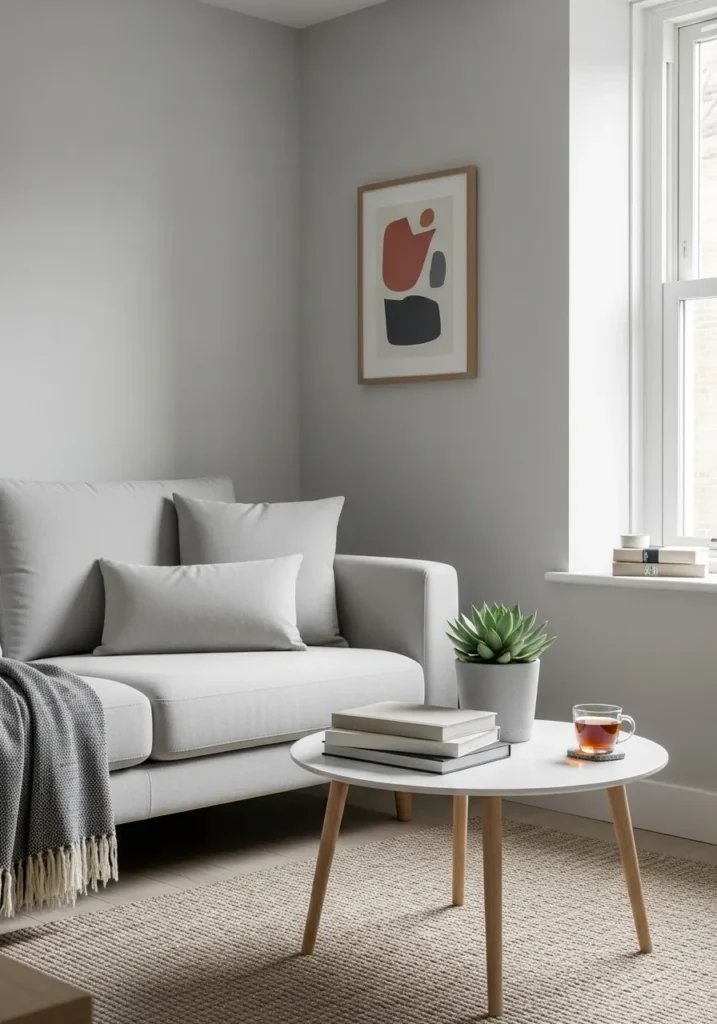
Mindful Spending
A minimalist lifestyle encourages mindful spending—making intentional financial choices that align with personal values and goals.
Strategies for Mindful Spending
- Track expenses to identify unnecessary purchases.
- Prioritize quality purchases over cheap, disposable items.
- Avoid retail therapy and impulse buying by implementing a waiting period before purchases.
- Invest in experiences rather than material goods, such as travel, learning, or cultural activities.
Financial Benefits in the UK
- Lower monthly expenses and reduced debt.
- Increased savings and long-term financial security.
- Reduced clutter from unnecessary items purchased impulsively.
By controlling spending habits, individuals can achieve both financial stability and a simpler, more fulfilling lifestyle aligned with minimalist principles.
Mental Wellness
Minimalism is as much about mental clarity as physical decluttering. A minimalist mindset helps reduce anxiety, improve concentration, and enhance overall well-being.
Practices for Mental Clarity
- Mindful Meditation: Daily 10–15 minutes of meditation reduces stress.
- Digital Detox: Limit screen time, particularly social media, to reduce mental clutter.
- Journaling: Track thoughts, gratitude, and goals for self-awareness.
- Prioritization: Focus on essential tasks and eliminate distractions in work and personal life.
Benefits in the UK Context
- Urban environments can be overstimulating; minimalism provides relief.
- Simplifying mental and digital spaces improves productivity.
- Encourages meaningful engagement with relationships and personal passions.
Productivity and Daily Habits
Minimalism extends into daily routines and productivity practices. By simplifying schedules and eliminating unnecessary tasks, individuals can focus on what truly matters.
Daily Habits
- Prioritize tasks using to-do lists or productivity apps.
- Maintain consistent sleep and meal schedules.
- Incorporate daily movement such as walking, stretching, or yoga.
- Dedicate time to hobbies and personal growth.
Work-Life Balance
- Set boundaries for work and personal time.
- Reduce multitasking; focus on one task at a time.
- Incorporate breaks and mindfulness practices to avoid burnout.
These habits ensure that time, energy, and focus are directed toward meaningful goals, enhancing quality of life and aligning with the minimalist lifestyle UK philosophy.
Sustainable Living
Minimalism naturally complements sustainable living, which is increasingly relevant in the UK. Reducing consumption, reusing items, and choosing eco-friendly alternatives benefits both the environment and personal well-being.
Sustainable Practices
- Buy less, choose quality, and avoid disposable products.
- Embrace second-hand shopping and donations.
- Reduce energy usage and recycle effectively.
- Prefer public transport, cycling, or walking to reduce carbon footprint.
Minimalism fosters mindful consumption, creating a lifestyle that is both eco-conscious and health-conscious.
Practical Tips
- Start small: declutter one room or category at a time.
- Keep only items that serve a purpose or bring joy.
- Implement digital decluttering: organize files, unsubscribe from emails.
- Plan meals and reduce food waste.
- Focus on quality over quantity in purchases.
- Maintain mindfulness and regular reflection.
Small, consistent habits make the minimalist lifestyle sustainable and fulfilling.
FAQs
What is a minimalist lifestyle in the UK?
Minimalist lifestyle in the UK emphasizes simplicity, intentional living, decluttering, mindful spending, and prioritizing experiences over possessions.
How can I start decluttering my home?
Assess each room, sort items into keep, donate, or discard, and adopt storage solutions. Start small and gradually declutter all spaces.
How does minimalism improve mental health?
Reducing clutter, limiting digital distractions, and focusing on meaningful tasks reduces stress, improves focus, and promotes emotional well-being.
Can minimalism save money in the UK?
Yes, mindful spending, reducing impulse purchases, and investing in quality items lower expenses and increase financial stability.
Conclusion
Adopting a minimalist lifestyle in the UK is about reclaiming control over your space, time, and mental energy. By focusing on simplicity, mindfulness, and intentional choices, individuals can reduce stress, enhance productivity, and achieve a more fulfilling life.
Decluttering your home and workspace clears physical and mental space, allowing focus on what truly matters. Mindful spending ensures financial freedom while reducing the accumulation of unnecessary items. Sustainable living practices further complement minimalism, benefiting both the environment and personal health.
Daily habits such as structured routines, regular movement, meditation, and focused work help maintain clarity and balance. Minimalism is not about deprivation; it is about making deliberate choices that align with values, enhance quality of life, and provide long-term benefits.